

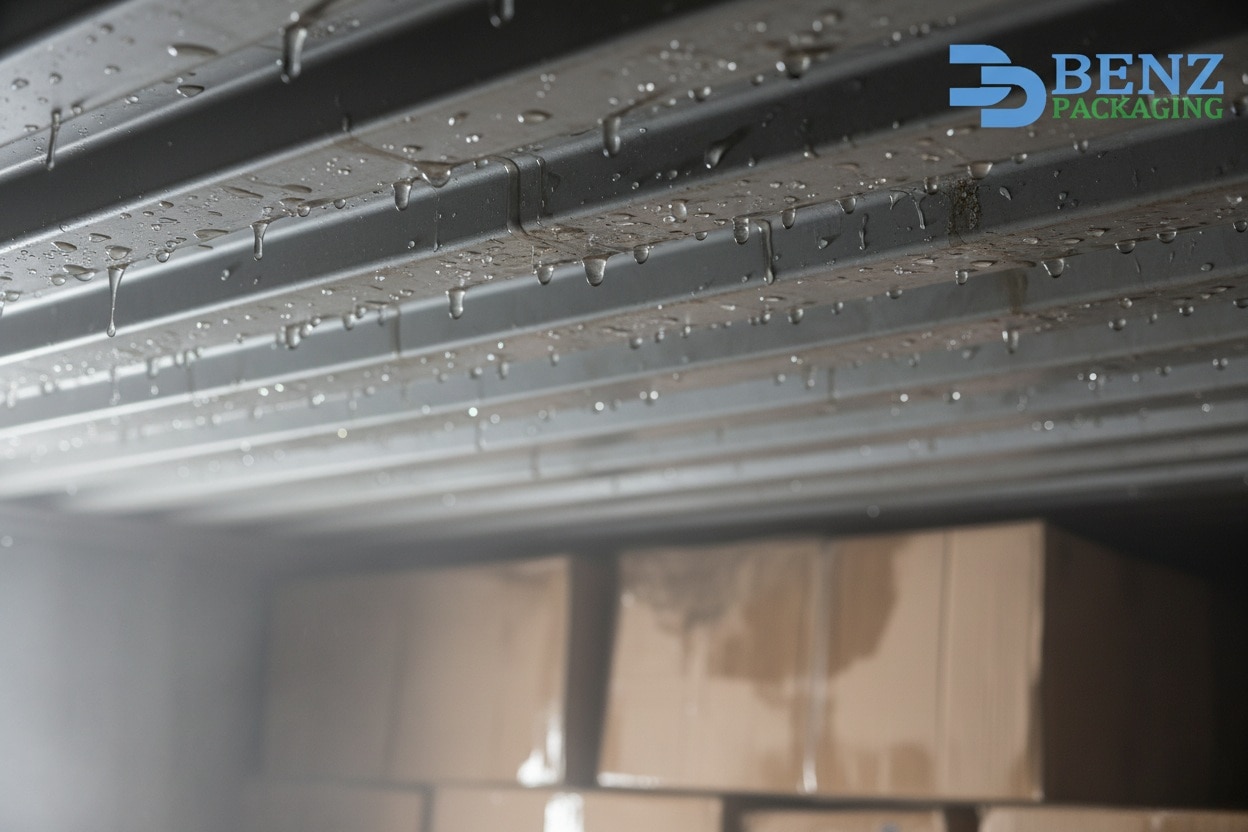
Container rain is one of the most costly and misunderstood problems in global shipping, whether you ship from India, the USA, or Europe. It refers to harmful condensation that forms inside sealed shipping containers during transit. Water droplets appear on the ceiling and walls, drip onto cargo, and cause damage ranging from soggy cartons to rust, mold, and insurance claims.
What causes container rain and why is it a global issue?
When the temperature outside your container changes like hot days
and cool nights and air inside reaches its dew point and turns to liquid. Steel
container walls and roof cool faster, so they act as the first surface for
condensation. Moisture comes from your cargo (like wood, textiles, paper),
pallets, and air trapped at loading. When condensation appears, it rains back
down by damaging goods and increasing claims.
This is not just a tropical or monsoon issue. Container rain is a
year-round risk for exporters in India’s ports, American logistic hubs, and
European trade routes. It threatens goods during long ocean journeys, over
land, and even in short-haul movements when there’s a big temperature swing.
How do you prevent container rain? Use proven container
moisture control solutions.
The fastest, most effective way is to proactively absorb moisture
and track container humidity using specialized equipment, container desiccants
and humidity indicator cards, backed by SOPs recognized in global shipping.
1. High-capacity container desiccants absorb and lock away
moisture.
· Be-Dry Desiccants: Premium hanging desiccant units
designed for long-haul ocean shipments. They pull moisture from container air
for up to 45+ days.
· Propadry: Wall- or roof-mounted desiccant
pads for containers where packing is dense or space is limited.
· Sanidry: Optimized for humid and tropical
lanes, providing robust performance during multi-modal shipping.
2. Validate with humidity indicator
cards.
·
Humidity Indicator Cards: Place
these cards in cartons or near container doors—they turn color if humidity
exceeds the safe limit, giving you a visible, auditable record at offload.
Best practices for zero container
rain risk:
·
Choose your desiccant format based
on journey length, expected humidity, and type of cargo.
·
Calculate units carefully like consider
container size, duration, cargo, and route climate.
·
Always hang or mount desiccants
above the cargo: never directly on boxes.
·
Use humidity indicator cards as a
compliance and documentation standard.
·
Seal container properly, check
gaskets, and photograph all in-container equipment for audit readiness.
Why BENZ Packaging?
BENZ Packaging’s solutions are specifically designed for exporters and shippers
in India, the US, and Europe meeting strict international standards, providing
rapid installation, and delivering consistent results. Our Be-Dry Desiccants, Propadry, Sanidry, and Humidity Indicator Cards are trusted
by hundreds of exporters worldwide for reliable container moisture control.
FAQs
·
What is container rain?
Container rain is condensation inside containers that damages goods via
dripping water droplets.
·
How can I prevent container rain?
Use high-capacity container desiccants and humidity indicator cards from BENZ
Packaging.
·
Are BENZ desiccants and indicator cards suitable for India, USA,
and Europe?
Yes. BENZ solutions are optimized for global shipping lanes.
·
Which product should I choose?
For long-haul ocean: Be-Dry. For dense packing: Propadry. For tropical lanes: Sanidry. Combine with Humidity Indicator Cards for monitoring.
·
Do I still need to check container seals and gaskets?
Always check. Physical damage leads to leaks. Desiccants control humidity, not
water entry.
Start every shipment with the right protection. Choose BENZ
Packaging’s container rain solutions and eliminate condensation damage, claims,
and delays worldwide.
